
Greenvolve at SANER 2026
Software is crucial for sustainability. Inefficient software consumes more computational resources, leading to increased energy usage and carbon emissions. As the digital infrastructure scales globally, optimizing software performance becomes essential not only for cost effectiveness but also for reducing environmental impact, which advocates designing, maintaining, and testing software systems that are energy-efficient, resource-conscious, and environmentally sustainable.
As the software evolves, developers often make numerous modifications to the software to address issues or implement new features. However, modifications may unintentionally degrade overall system performance and energy consumption, leading to performance regression. Furthermore, current testing practices are based on system-level evaluations in controlled environments. However, these approaches often struggle to keep up with rapid development cycles, such as those in DevOps, due to their high demands for resources and time.
Recent advances, such as improved cooling systems and the shift from local computing to large-scale data centers, have contributed to greater energy efficiency in software infrastructure. However, the growing demand for machine learning (ML) and artificial intelligence (AI), together with emerging computing technologies, such as quantum computing (QC), may offset these gains with their significant carbon footprint. Despite these challenges, AI and QC also have significant potential to promote sustainability through applications that optimize resource usage and support environmental monitoring.
Therefore, we propose the Greenvolve workshop with the following goals:
- Discussing Opportunities for Green Software Engineering. Investigate how sustainability can be a part of software design, architecture, maintenance, and evolution, with a focus on energy efficiency and resource awareness.
- Addressing Practical and Technical Challenges. Discuss how to integrate sustainability metrics into existing development and DevOps workflows, especially in fast-paced environments and modern architectures.
- Fostering Collaboration. Encourage dialogue and cooperation among researchers and practitioners in the fields of software engineering, AI, quantum computing, and sustainability to share insights, tools, and best practices.
- Shaping the Future of Green Software Evolution. Identify open research questions, emerging trends, and future directions in green software, including the role of AI and quantum technologies in reducing the environmental impact of digital infrastructure.
The proposed topics include, but are not limited to:
Accepted papers
-
Paolo Ferragina and Francesco Tosoni
“The Energy–Throughput Trade-off in Lossless-Compressed Source Code Storage” -
Elena Ballesteros-Morallón, Félix García, María Gutiérrez, Mª Ángeles Moraga and Coral Calero
“GREENN: Granular evaluation of Energy Efficiency in Neural Networks” -
Carlos Pulido Hernández, María de Los Ángeles Moraga de la Rubia and Félix Óscar García Rubio
“Orchestrating AI-Driven Code Refactoring Based on Energy Measurements in CI Pipelines” -
Robert Arntzenius, Xutong Liu and Andy Zaidman
“On The Energy Consumption of Continuous Integration in Open-Source Java Projects” -
Maja Hanne Kirkeby and Timmie Lagermann
“Power Assumptions Matter: Revisiting Laptop Energy Models for Sustainability Reporting” -
Anas Shatnawi, Benoit Verhaeghe, Boubou Thiam Niang and Louay Khrouf
“Energy Consumption of Web Frontend Frameworks: An Empirical Comparison of Angular and React” -
André Brandão, Diogo Matos, Miguel Guimarães, Simão Cunha and João Saraiva
“The Green Side of the Lua” -
Kalle Pronk, Qin Zhao and Siebren Kazemier
“Beyond Model Optimization: Practical Energy-Efficient LLM Inference through Context-Aware Input Reduction” -
Alessandro Aneggi, Andrea Janes and Xiaozhou Li
“PPTAMη: Energy Aware CI/CD Pipeline for Container Based Applications”
Program
Times are in Cyprus local time (EET, UTC+2, CET+1)
| 9:00 - 9:15 | Welcome and opening message |
| 9:15 - 10:05 | Keynote by Weiyi Shang: “Evaluating the efficiency of LLM-generated code” |
| 10:05 - 10:30 | The Green Side of the Lua |
| 10:30 - 11:00 | Morning coffee break |
| 11:00 - 11:25 | The Energy–Throughput Trade-off in Lossless-Compressed Source Code Storage |
| 11:25 - 11:50 | On The Energy Consumption of Continuous Integration in Open-Source Java Projects |
| 11:50 - 12:15 | Power Assumptions Matter: Revisiting Laptop Energy Models for Sustainability Reporting |
| 12:15 - 12:30 | Energy Consumption of Web Frontend Frameworks: An Empirical Comparison of Angular and React |
| 12:30 - 14:00 | Lunch |
| 14:00 - 14:15 | PPTAMη: Energy Aware CI/CD Pipeline for Container Based Applications |
| 14:15 - 14:40 | GREENN: Granular evaluation of Energy Efficiency in Neural Networks |
| 14:40 - 15:05 | Orchestrating AI-Driven Code Refactoring Based on Energy Measurements in CI Pipelines |
| 15:05 - 15:30 | Beyond Model Optimization: Practical Energy-Efficient LLM Inference through Context-Aware Input Reduction |
Keynote
Title: Evaluating the efficiency of LLM-generated code
Abstract: The integration of Large Language Models (LLMs) into software development holds the promise of transforming code generation processes. While AI driven code generation presents numerous advantages for software development, code generated by large language models may introduce sub-optional efficiency of the generated code. In this talk, I will share our recent study on the efficiency of LLM generated code and associated benchmarks. I will also share our initial try out of optimizing efficiency of LLM-generated code.
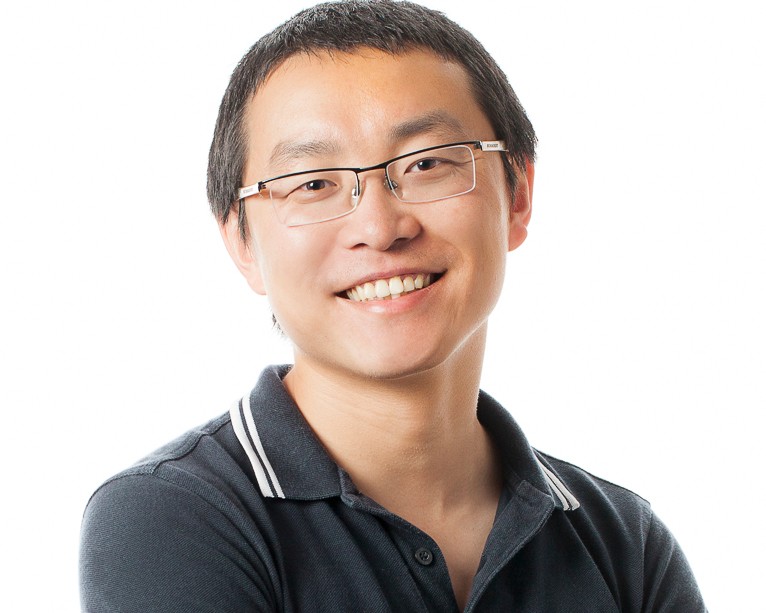
Bio: Weiyi Shang is an Associate Professor at the University of Waterloo. His research interests include AIOps, big data software engineering, software log analytics and software performance engineering. He serves as a Steering committee member of the SPEC Research Group. He is ranked top worldwide SE research stars in a recent bibliometrics assessment of software engineering scholars. He is a recipient of various premium awards, including the CSCAN-INFOCAN Outstanding Early Career Computer Science Researcher Prize in 2021, the SIGSOFT Distinguished paper award at ICSE 2013, ICSE 2020 and 2025, best paper award at WCRE 2011 and the Distinguished reviewer award for the Empirical Software Engineering journal. His research has been adopted by industrial collaborators (e.g., BlackBerry and Ericsson) to improve the quality and performance of their software systems that are used by millions of users worldwide. Contact him at wshang (at) uwaterloo.ca; uwaterloo.ca/electrical-computer-engineering/profile/wshang.
Call for papers
Topics include, but are not limited to
- Green software design, architecture, maintenance, and evolution
- Green performance testing and regression detection
- Metrics and modeling for green software
- Automation and tooling for green software
- Benchmarks for performance and sustainability
- Green DevOps practices
- Empirical studies, case studies, experience reports, and practices on green software
- Green AI and machine learning
- Quantum computing and sustainability
- Carbon footprint assessment and optimization in software
Submission
The workshop welcomes submission of three types of contributions:
- Full papers (maximum 8 pages): papers describing mature research results, industrial case studies, or empirical findings related to workshop topics.
- Short papers (maximum 4 pages): papers presenting promising ideas, tool descriptions, or initial results for which a full evaluation is not yet available. These may include early-stage research, novel approaches, or innovative applications in practice.
- Position papers (maximum 2 pages) visionary papers offering perspectives on the future of performance engineering in the next 5 to 10 years. These papers may address anticipated challenges or emerging trends or call for specific research directions.
Submitted papers must have been neither previously accepted for publication nor concurrently submitted for review in another journal, book, conference, or workshop.
Submissions will undergo a full double-anonymous review process. To be compliant with the double-anonymous policy, submitted papers must adhere to the same rules as those of the Research track of SANER 2026, which can be found here.
All submissions must come in PDF format and conform, at the time of submission, to the IEEE Conference Proceedings Formatting Guidelines (title in 24pt font and full text in 10pt font, LaTEX users must use \documentclass[10pt,conference]{IEEEtran} without including the compsoc or compsocconf option.
IEEE paper templates can be accessed from their official location.
Submitted papers must comply with the IEEE Policy on Authorship.
All submissions must be in English and must not exceed page limits, which include figures and references.
Contributions need to be submitted in PDF format via EasyChair to SANER 2026.
Organizing Committee
- Fernando Castor, University of Twente, The Netherlands
- Emanuela Guglielmi, University of Molise, Italy
- Luana Martins, University of Salerno, Italy
- Michele Tucci, SPENCER Lab, University of L’Aquila, Italy
Program Committee
- Shaukat Ali, Simula Research Laboratory, Norway
- Vasilios Andrikopoulos, University of Groningen, Netherlands
- Martin Beseda, University of L’Aquila, Italy
- Coral Calero, University of Castilla-La Mancha, Spain
- Jácome Cunha, University of Porto and HASLab/INESC TEC, Portugal
- Diego Elias Costa, Concordia University, Canada
- Daniele Di Pompeo, University of L’Aquila, Italy
- Maja H. Kirkeby, Roskilde University, Denmark
- Adel Noureddine, University Paris Nanterre, France
- Ana Oprescu, University of Amsterdam, Netherlands
- João Saraiva, University of Minho and HASLab/INESC TEC, Portugal
- Vincenzo Stoico, Vrije Universiteit Amsterdam, Netherlands
Important dates
(All deadlines are 23:59, Anywhere on Earth)
Abstract submission: December 12, 2025Not mandatory- Paper submission: December 18, 2025
- Authors notification: January 14, 2026
- Camera-ready version: January 20, 2026
- Workshop dates: March 17, 2026
Contact
For any questions, please don’t hesitate to contact us at: greenvolve2026@easychair.org
Sponsors
This workshop is sponsored by the RECHARGE project, funded by the Italian Government (Ministero dell’Università e della Ricerca, PRIN 2022 PNRR) - cod.P2022SELA7: “RECHARGE: monitoRing, tEsting, and CHaracterization of performAnce Regressions” - Decreto Direttoriale n. 1205 del 28/7/2023.